How Can A Good God Permit Suffering?

Series on Understanding Suffering: First Article
Second Article: Man Creates Much of His Suffering
Third Article: Working With God to Relieve Suffering

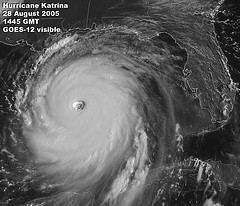
Earthquakes and tsunamis devastate Japan. An earthquake in Haiti brings widespread death and suffering. Hurricane Katrina and other disasters disrupt people’s lives and destroy communities. Diseases such as cancer and viruses cause suffering and death. Some people see or experience these events and cry out “Where is God?”

NASA Photo

Suffering is a part of every generation. According to Job “man who is born of woman is of a few days and full of troubles,” Job 14:1. To the atheist, suffering is just a characteristic of the world. For the Christian suffering is more complex because the suffering of the world appears to be at odds with the characteristics of God.

The Bible teaches us that God is all good and all powerful. This introduces an ancient dilemma: If God is good and is all powerful He would not let these things happen; therefore, His is either not good or not all powerful. Some theologians have suggested that God is neither infinitely powerful nor infinitely good, but only in the process of acquring these attributes. This would be insufficient for if God is neither good nor omnipotent, He is unworthy of our worship.

Judging God’s Goodness

The first problem we encounter when we try to evaluate the goodness of God is our own limited standards.

As sinners, we are poor judges of a good God, Romans 3:10-18

Many conflicts arise between parents and children when the children want to do something that the parents, through wisdom and experience, forbid. Older children realize the wisdom of their parent’s decision and thank them for not allowing them to do something that they, at the time, thought was a “good” thing to do. The degree of wisdom that separates parent and child is much less than the degree of wisdom that separates us from God.

Finite beings are poor judges of an infinite God, John 40:2, 8

God can see the chain-reactions of all actions and can bring about ultimate good from any situations. God was able to convert the apparent defeat in the life of Jesus on the cross to a victory for all men. Many people credit their greatest moments of growth and strength to the greatest trials in their lives. Paul conforts believers, in Romans 8:28, that “All things work together for good to those who love God.”

We only see the limited view of a life that is like a vapor. God is eternal and can see how all things fit together and how events interconnect with other events. We get wrapped up in the events of our lives and often do not realize the far reaching implications of our actions today on future events. But God knows.

Questioning is sometimes a matter of degree

At what point of suffering do we feel justified in questioning God’s goodness or feel that God should intervene to prevent suffering? What number of lives lost in an incident allows us to question God’s goodness? 2,000,000? 200,000? 20,000? 2,000? 200? 20? 2? What about loss of property?

At what point to we go beyond feeling sad about a tragedy and move to questioning God’s power or goodness? There are many problems and trials that occur in people’s lives. We were not created to live pain-free lives. We were not created to live forever in the flesh. We live in a natural world with consequences for all of our actions. If we fall from a large height or are involved in a high speed accident, there is a good chance that our physical body will not survive and, if it does, it will suffer great pain. Pain, suffering, and death is a part of life. To complain that the suffering and pain of life is unfair is immature. It is unpleasant, and perhaps we feel we do not deserve the pain, trials,  and suffering, but they are part of life.

We must realize that one cannot draw a line that separates “acceptable” suffering and “unacceptable” suffering. If the death of 200 people in a tragedy leads us to question God, why would we mourn the loss of 150 without questioning God? Why would the death of even one not cause us to question God? It’s only a matter of degree between what we accept as a part of life and what leads us to question God. This is an arbitrary judgment.

Selfish Judgment

Often we judge God’s goodness based on our hapiness or ease–never a standard for good with God. The greater good for man is not ease for his spiritual life often languishes when he does not endure trials. The muscle grows when it is torn and stretched. Iron is made hard through fire and hammering. Gold is purified through fire. We develop character and perseverance through trials and suffering, Romans 5:1-5.

As we will examine later, instead of blaming God for suffering perhaps we should see the opportunities to grow in our faith and in our trust in God.

Don’t Talk Your Dreams To Death

In all toil there is profit, but mere talk tends only to poverty. Proverbs 14:23

“In all toil (labor) there is profit”
Diligent work always leads to some result or profit of benefit to the worker. Most work is neither easy nor fun but it does pay the bills and provides money for doing good and having fun. Even if you have a job you enjoy, there will be  unpleasant duties. People who love to garden still must get dirty, sweaty, and dig through the soil if they want to have the flowers or produce of the garden.

“Mere talk leads to poverty”
In contrast to diligent labor, talk without action leads to poverty. Idle talking does not pay and has gotten some people fired. Grandiose plans and slick presentations may impress others but it does not pay one cent if no labor is expended to make the dream a reality.

The first obvious application—indeed the natural application—of this verse is to the business world. In the early days of personal computers —before the average person could access the Internet—a man I knew had great plans to work with realtors to put pictures of houses for sale on videodisc (pre-DVD) with sale information for agents and customers. He had a prototype system, good marketing plan, and enthusiastic presentation. He talked with people in the office about his plans and the unlimited potential for profits. One problem: he did not have customers or profit from the work because he did not get out and talk to the customers who needed the system. In short, he planned and talked his way to poverty while other people, through hard work, were able to profit from similar ideas.

The world is made up of  poor creative geniuses and  rich people of average intelligence. The difference is not what they know but by what they do.

This principle is especially important for spiritual growth. Is your spiritual life the product of hard work or mere talk?

Some people talk about “getting their life right” or “straightening up” but still hang out with ungodly friends, feed their minds with filth, and do not change. Some say they want to pray or study more—and do so year after year. Some talk about doing more things with their brethren, helping the sick or needy, or getting involved with some work in the church but do not act.

Some people realize their life is displeasing to God, is yielding undesirable consequences, and is unsatisfying so they change their behavior. Some want a closer relationship with God and execute a plan to study and pray more frequently. Some take action to involve themselves with their brethren so they can have richer and deeper fellowship with other Christians.

If you want to have a rich and meaninful spiritual life, you’ll have to work for it.

  • Romans 13:11-14 – Awake and get busy
  • Thessalonians 5:4-8 – get busy with good things
  • Ephesians 5:14-17 – wake up and make good use of your time

 “He who works his land will have abundant food, but the one who chases fantasies will have his fill of poverty.” Proverbs 28:19 (NIV)

“The road to hell is paved with good intentions.” How sad it will be for those who dreamed of a close relationship with God and their brethren, a close loving family, and a meaningful life’s work to fail because they only dreamed and did not act.

Developing Focus and Flow in School Studies

Several months ago, my dear niece Kaylin was feeling overwhelmed with a lot of school assignments, tests, essays, papers, and book reports. I sent her the following which she said greatly helped her and others that she shared it with. If school work (or tasks at work) frustrate you, I hope the following tips will give you help. These principles are useful at work, managing a home, and even Bible study.
(Hat tip to David Allen and Getting Things Done book for teaching me many of these lessons.)

Organize your commitments. Make a list of all of your commitments–papers to write, test dates, and other assignments and sort the list  by due dates (earliest due at the top of the list).

Define tasks for “projects.” For term papers or assignments that require multiple steps to complete (going to library to get research materials, making outline, turning in first draft…), list the specific actions that you will need to finish the project. For example:

  • Get 3 library books on History of Spain
  • Read research materials
  • Make reference cards
  • Write first draft, etc.

Assign due dates to each action allowing plenty of time to do each task and complete the last task before the project due date.

Prioritize. Review the list of all steps (individual tasks and project steps) and list them by due date starting with the earliest due.. This will help you understand what you must finish first, second, third, etc. This will also assure you that you are doing things in the right order so you won’t stress while doing one assignment worrying that you should be doing something else.

Fighting Distractions

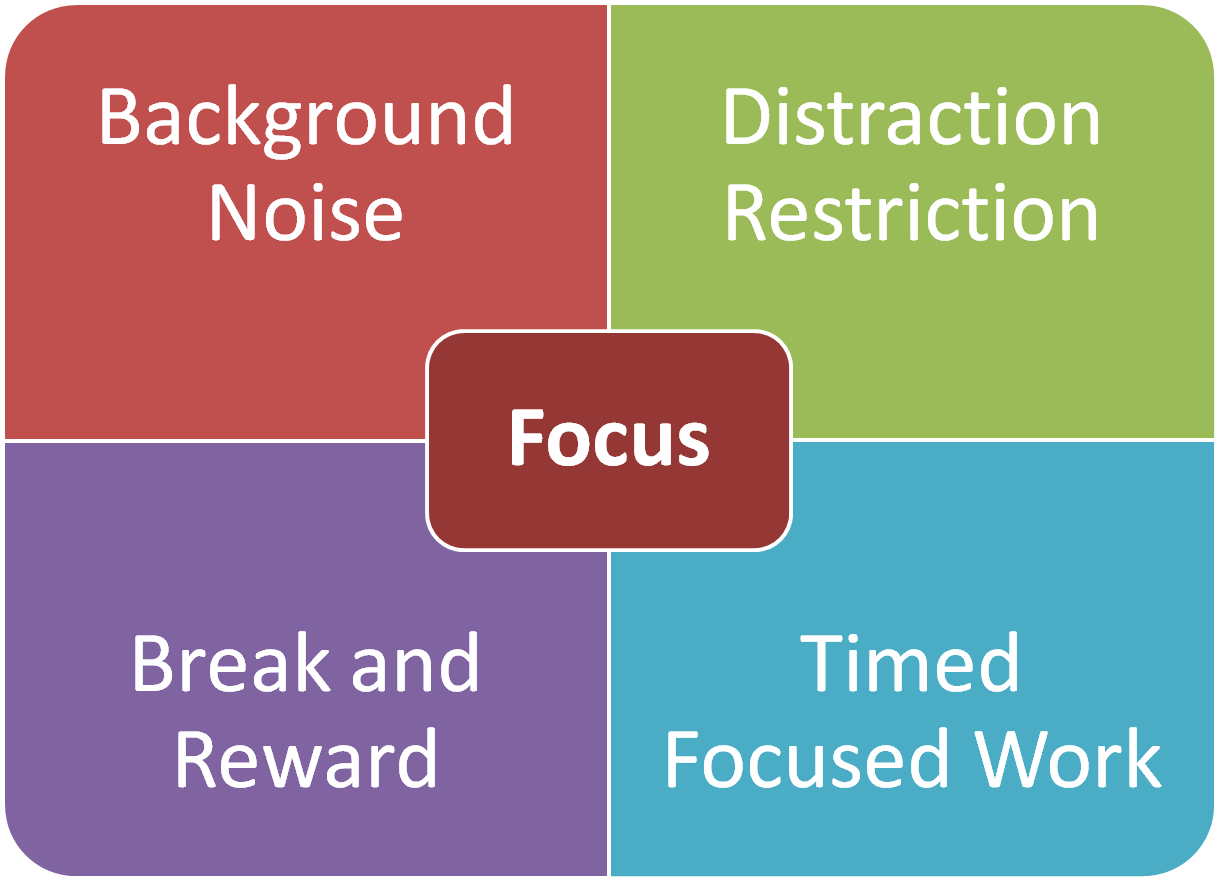
Background Noise. Turn on instrumental music (ambient music, classical, DJ/Dance…) to listen to while you work. Music with lyrics will be distracting as your mind tries to process the words while doing critical thinking. Your brain doesn’t have to listen to or interpret non-vocal music. Vocal music is fine when doing non-analytical processing (crafts, building projects) but there is a cognitive cost of listening to lyrics while trying to process words in a textbook or writing.  You could also use a sound machine that generates peaceful sounds like ocean waves, crickets, or running water.

Restrict Interruptions. This means no texting or phone calls. Put your phone on silent and in a drawer to remove the temptation.  Also, unless you are doing Internet research do not have your browser open. If you are doing research, make sure social media networks are off (not in a hidden tab…OFF) and chat is unavailable. This will help you get in “the zone.” Interruptions throw off your “flow” and work takes longer to complete. Also, having these available makes it easy to “just check that message, updates…” when you run into something that is not much fun or difficult–this is evil. Put a “do not disturb” message on your door.

 Focused Work. Set a timer for a specific period (~30-50 minutes) and do NOTHING but task #1. Try to complete the task within the time (but don’t stress if you don’t–make it a game to see how much you can do in the allotted time). Do not stop the work–no message checking, cleaning your room, NOTHING!!–until the timer goes off. If the only timer you have is on your phone, go to http://www.e.ggtimer.com and set the time you want to study. A kitchen timer would be best since you don’t have to leave the Internet up or have your phone (with text alerts) visible.

 Break/Reward. When the timer goes off, set the timer again for 5-10 minutes (less if you have a lot of work to do. While standing and stretching text, check social media, or whatever. As soon as the timer goes off (IMMEDIATELY), shut the devices off and close social media. Do not “check one more message…”

Resume. Reset the timer and either finish the assignment you started or begin action #2. Continue this until you complete all the actions that you need to complete today. Some tasks will have to take place tomorrow but your priority list will give you the confidence that you know what must be done today and what can wait for another day. This also gives you peace when you finish today’s task list you can enjoy time with friends or doing something you enjoy knowing that you have planned time to complete your remaining assignments on time.

Other tips and observations:

  • Don’t work to perfection–especially at first. For example, if you have a writing assignment, just get the ideas on paper as they flow and go back and correct grammar, and reword things later. This is important for two reasons. First, if something bad happens that leaves you with little time you still have something to turn in instead of no assignment. Two, it relieves the stress when you have a lot of assignments, knowing you have something to turn in and can return to the assignment later, if you have time, to improve the work quality.
  • “Don’t let perfect be the enemy of good.” Don’t spend so much time on formatting, appearance, etc. that you have little time to do other assignments. Do the best you can and when (if) you have time, go back and make it prettier, more profound, etc.
  • Be careful with sugary foods and energy drinks as they can give you a quick high but you will feel more tired (and hungry) when you quickly crash. Drink lots of water and snack on nuts, fruits, and other foods that will give you sustained energy.
  • Pray to God for strength and thank Him for the opportunity to be in school and ask for His help since you want to use your education to His glory.
  • For lengthy reading assignments, learn to scan well and note important parts. Most of books are fillers with nuggets of info. Some speed reading techniques will help you harvest the important information without being caught up in unnecessary info.
  • For test prep: Try to make as many mental images to help you remember lists and associate terms and ideas. The more outrageous the image the better. Have a buddy quiz you and quiz them. Learn memory techniques.

Now available! A PDF copy with the basic guidelines to post by your study area to remind you of the study principles. Download here.Developing Focus and Flow in School Studies

When God Delays

When we pray to God, sometimes we expect God to answer us immediately. We are used to instant results from texting, overnight shipping, fast food, etc. Sometimes we may feel that God is not listening or doesn’t care when we cry out to Him. However, as we mature in our faith we discover lessons that can only be learned by God’s delay in answering our prayers.

Despite the empty promises of some health-and-wealth preachers, believers are never promised a life free of suffering. In fact, suffering believers are main characters in the Bible story. The story of Job and the words of Jesus in John 9:1-2 and Luke 13:1-5 clearly separate suffering and disaster from one’s righteousness or lack of it. We may suffer consequences of sinful actions but we can also suffer from time and chance. If obedience to Christ guaranteed a prosperous and pain-free life, few would reject the gospel’s call. Sometimes we must suffer as Christians.

Believers sometimes feel that God is not helping them during trials. We can feel abandoned and cry out “Why have you forsaken me?” Perhaps we might wonder if we have cleansed our hands in vain (Psalm 73). In agony or frustration we might cry out to God, “Where are you?!?” Consider these heartfelt cries from the Psalms:

  • Psalm 43:1-2 – “Why have you cast me off?”
  • Psalm 44:23 – “Why do you sleep, O’ Lord?”
  • Psalm 88:13-14 – “Why do you cast off my soul?”

Our cries are more bitter when we hear the scoffer and enemy say, “Where is your God?” Depression can lead to doubt. Frustration with God can lead to anger. How can God’s delay in answering our cry benefit us?

Delay Challenges Us To Use Our Faith

Jim happened to meet the minister on the street one day, and during the conversation told him of all the troubles he had had during the past year. He wound up with: “I tell you right now, preacher, it’s enough to make a man lose his religion.”  “Seems to me, Jim,” the minister told him quietly, “it’s enough to make a man use his religion.” Tan, P. L. Encyclopedia of 7700 Illustrations.

Jesus told a parable to teach believers not to give up. The Persistent Widow and the Judge (Luke 18:1-8) teaches that God is a just and loving Father but sometes He “bears with us” before answering. It takes faith to continue to pray and hope when it appears that any reason to hope is gone. Jesus asked a soul searching question at the end of the parable: “Nevertheless, when the Son of Man comes, will he find faith on earth?” Will He find people who still trust Him even when it appears that He is not responding to their prayers? He told a parable to teach believers not to give up and wonders if anyone will not give up!

Delay Teaches Total Dependence On God

Some consider themselves dependent on God but when things turn against them, they feel God has forsaken them and they reject Him. Dependence on God must not depend on external factors: possessions, health, employment status. It is easy to feel dependent on God when your enemies are lying at your feet, the battles are won, and the treasures gained. The challenge is to be faithful when you remain faithful in the face of defeat. Revelation 20:8-9 portrays a small city of saints surrounded by a army reaching to the horizon all around. Only when the enemy closed in and was ready to smash the small company of believers did God unleash His fury and destroy the opposition. Though He could have destroyed them before they came near the city, He challenged the faith of the believers to maintain their hope and dedication in the face of what appeared to be certain defeat. How many will lose faith and give up before the victory? Who will still rely on God when it appears that God is unreliable?

We often rely too much on our own power. We must understand that control is an illusion and that most things are out of our control. God’s delay reinforces this and encourages us to rely on God’s power (2 Corinthians 4:7-10)

Delay Teaches The Believer Hope

According to Romans 5:3-4, it is tribulation that yields hope, not ease. Perseverance is not succeeding but trying and failing, without giving up. Character is not a sterling reputation but the excellence that comes from enduring trial when it would be easy to give up or, through deception, trying to escape a trial that one must face. When we have forged strong character through patient endurance, we emerge with a hope for better days and eternal rest from all trials.

What Christians sometimes fail to realize is that suffering on earth sweetens the taste of heaven! The more we must endure suffering, the less hold the world can have on us. Why should we desire rest for our labor when the work is not hard? Why would we hope for a home in heaven if our home on earth is comfortable enough? Can the promise of “no more sorrows or tears” in heaven mean anything if our hearts are not broken and we suffer no loss on earth? Suffering allows us to see earthly things in their fragility and the greater value of eternal things.

When you must face trials that seem unending and unrelenting, let it draw you closer to God and teach you lessons you could learn no other way.

Dumbing Down Christianity

Guest Post by Phil Robertson

Did you know that 10% of church goers in America believe that Joan of Arc was Noah’s wife? That really should not surprise us, since less than 20% of “church goers” will attend Sunday school this week. A lack of biblical knowledge in churches seems to be a sign of the times.

Popular Christian researcher George Barna claims people are soft when it comes to committing to God. “Americans are willing to expend some energy in religious activities such as attending church and reading the Bible, and they are willing to throw some money in the offering basket. Because of such activities, they convince themselves that they are people of genuine faith. But when it comes time to truly establishing their priorities and making a tangible commitment to knowing and loving God, and to allowing Him to change their character and lifestyle, most people stop short. We want to be ‘spiritual’ and we want to have God’s favor, but we’re not sure we want Him taking control of our lives and messing with the image and outcomes we’ve worked so hard to produce” (www.barna.org – April 18, 2006).

As frustrating as this may be for church leaders, we need to ask ourselves, “Are we seeking ways to reverse this trend or are we contributing to the problem?” It seems churches have resorted to entertaining the masses instead of educating. You may be more likely to get a drama or extravaganza when you “go to church” than a Bible class or a sermon. In fact, a local news station recently ran a story on a church that had replaced all preaching with plays.

Jesus was faced with a similar dilemma during His ministry. He knew people were not following Him for the right reasons. So, He refused to feed them. “Most assuredly I say to you, you seek Me, not because you saw the signs, but because you ate the loaves and were filled. Do not labor for food which perishes, but for food which endures to everlasting life, which the Son of Man will give you” (John 6:26-27).

Instead of seeking to emulate theaters and concert halls, maybe churches would have better attendance and more commitment if they to looked and acted like a church. In its infancy, Christianity was grounded in teaching and preaching the gospel of Christ. Young evangelists were admonished to “Preach the word! Be ready in season and out of season. Convince, rebuke, exhort, with all longsuffering and teaching” (1 Timothy 4:2). Why was there such an emphasis on education? Because the gospel, and only the gospel, “is the power of God to salvation for everyone who believes” (Romans 1:16).

In conclusion, this may be the most disturbing statistic. About one-third of Americans who describe themselves as “born again” believe that if a person is good enough they can earn a place in heaven. That is scary! Many in churches do not understand the most fundamental biblical doctrine – grace. No one will ever be “good enough” to go to heaven (Ephesians 2:4-9). The gospel is “good news” for this very reason. Jesus died in our place and then was raised from the dead (2 Timothy 2:8). We are saved by His blood not our own goodness (Romans 6:3-10).

However, if we do not preach it, people will not learn it. Biblical faith begins with the word of God (Romans 10:17). That is why the apostle Peter said, “Beware lest you fall from your own steadfastness, being led away with the error of the wicked but grow in the grace and knowledge of our Lord and Savior Jesus Christ. To Him be the glory both now and forever. Amen” (2 Peter 3:17-18). (All statistics from http://www.barna.org)