
Over the years I’ve written several articles and reflections on raising 6 children, including two we “adopted” as teenagers, and plan to write more in the future. I’ve moved these articles to my personal website rhodesdavis.com. You can reach those categories by clicking this link.
How To Write A Memorable Eulogy — Example Memorial Service Included
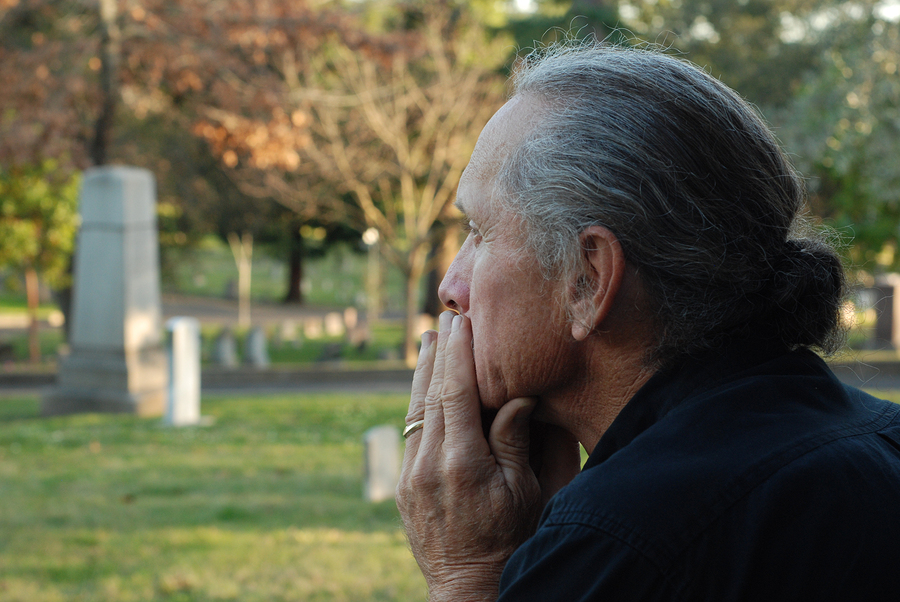
The eulogy is one of the most important speeches one could deliver as it pays tribute to the meaning of a life in the presence of those mourning the loss. It is a solemn occasion as friends and family, often separated by hundreds of miles and many years, gather to pay a final tribute to a loved one. In most cases it is a celebratory time of a life well lived. Tragic situations can provide an opportunity to develop sympathy for the deceased or remember Man Sitting At Gravesitethe important lessons a life cut short. It is the final public reflection of the life that has passed and a means of providing comfort and closure for the survivors. We do disservice when we pull out a standard funeral service from a book of stock event speeches. A vague speech about death and remembrance is equally lacking. A eulogy should memorialize the end of life with an exclamation point, not a whimper.
Why A Good Eulogy Is Important
I’ve walked out of a funeral home with my sadness over a lost loved one compounded by hearing a eulogy comprised of generic platitudes, vague words of comfort, and little insight about the life that ended. It is a tragedy that one could live an honorable life of love and service only to be eulogized with the same generalizations that would fit a thousand other people.
The eulogy is one of the most important speeches one could deliver. It is a tribute that reminds the mourners that the deceased’s life had meaning. It is a solemn occasion as friends and family, often separated by hundreds of miles and many years, gather to pay final respects to a loved one.
In most cases, it is a celebratory time of a life well-lived. Tragic situations provide an opportunity to remember the important lessons a life cut short. It is the final public reflection of the life that has passed and an important step towards gaining closure. It is a disservice to pull out a standard funeral service from a book or web page of stock speeches. A vague speech about death and remembrance is equally lacking. A eulogy should memorialize the end of life with an exclamation point, not a whimper.
This is not an easy speech. Perhaps you did not know the deceased very well — well enough to give a testimony of their life. Perhaps difficult situations surround the death that makes a tough job tougher. You are giving a speech beside the remains of someone who was recently living with mourners crying beside you. For these reasons alone, this is not an easy task. Done well, this is an honorable task celebrating a life and giving survivors a reason to be proud of their loved one.
Preparing the eulogy or tribute
The following steps will help you prepare a memorable eulogy:
- Gather material on the deceased
- Choose the material that best fits into the narrative
- Organize the presentation in a logical and inspirational flow
Each step is important in order to organize a clear message and prevent purposeless rambling. If you gather stories but do not fit them into a logical framework, your audience may be lost and frustrated during the presentation. Some eulogies are a series of numerous repetitive stories that do not have a coherent theme or purpose other than filling time.
The keyword for a memorable eulogy is story. A eulogy is a brief story of someone’s life that highlights matters worthy of remembrance and example. Any good story requires quality source material and intelligent editing.
Remember, you are not a reporter or detective trying to sift out the facts or present a case. You are telling the mythos of a person’s life — how they viewed themselves and their loved ones saw them. You weave the tapestry of a person’s life by selecting the stories that represent who the person was. There is a bit of myth as we humbly emphasize the good and graciously omit the failures.
Gathering material on the deceased
The first work will be gathering data from which you will select stories. When getting material from people, do not promise a particular story will be in the eulogy. Tell them that you are trying to make sure you present a complete picture of their loved one and deepen your understanding of the deceased and their impact on others. Tell them you will hear many stories that you would love to include but cannot but appreciate any information that helps you honor their loved one.
The first source is, of course, the immediate family. After the initial shock of the loss, often the family is ready to talk about their loved one. Perhaps it is our way to begin the process of keeping memories fresh or the comfort of telling stories of our loved ones brings them alive in our minds and hearts again. The closest family members: parents, spouse, and children will often know what to emphasize in the loved one’s life. They know what was important to them.
For one funeral, the wife wanted me to make sure that the audience knew that he was a good businessperson and proud that he was able to take care of his family so well. Another family fondly remembered their mother’s attention to family and her love of classic movies. These points of pride can become anchors that allow you to build the foundation of the speech. You do not want to present someone as one-dimensional but you don’t want to neglect what everyone close to the person knew was important to them.
The close loved ones usually have the best stories. I usually keep a notebook and capture the highlights (dates, locations, key events, and key quotes) but you could also tape the conversation as well. Ask some questions to help bring out the stories. I have found this works best in a group setting. One story will spark another and sometimes you will see matters of agreement and emphasis on certain characteristics of the deceased that will point you to significant things to address in the eulogy. Remember, you are not going to use everything you hear but the more material to select from, the better.
Here are some questions to consider asking:
- Were there some important life lessons or quotes that <the loved one> recited frequently? (Especially good to ask of children and grandchildren)
- Was there an affectionate nickname used by the kids or grandkids? This can be useful when referencing a story from one of the kids or grandchildren. (“Charles, or as the grandkids called him, Grandy, used to say…”)
- Did the deceased have a brush with any personal heroes or famous people that made an impact on their life or that they were proud of?
- Were they passionate about a sports team, car brand, or event? The key here is passion. Frequent family comments or memorabilia might indicate a fan and adding a comment, if appropriate, adds color to the character.
- Were they devoted to certain hobbies or activities? Again, you are trying to differentiate between passion and mild or passing interest. For example, my mom collects bells, not because she is passionate about them but she received a few, put them on display, and people assumed she collected bells and kept giving her bells. She is not a bell aficionado but she has a lot of them. However, a friend was a talented woodworker and his eulogy recalled his love for being in the shop and how many in the audience received gifts he made for them.
Inevitably, one of the children or other family members will offer to send you some other stories after the conversation. Welcome this request but give them a due date for stories. You do not want to arrive at the funeral home to have the person hand you five pages of stories and quotes (it has happened to me). Explain that you will need it by a certain time so you can read and reflect on it. This is also helpful when close family members are out of the area. You can have them email their recollections or observations.
Other Sources For Background Information
- Managers/Leaders: Other people you may interview are current employers and the leaders in religious, service, or social clubs of which they were active members.
- Online: Look at their social media accounts, such as Facebook, if they have them. If they were in business, they may have a LinkedIn profile with some great material on their professional life.
- Other tributes: A speech from a retirement ceremony, silver anniversary, or other special events can provide good source material. If the person was actively employed at the time of death, the company may have sent out an internal email to its employees and/or customers that highlighted some things in the person’s professional career and what they meant to the company. Likewise, their social or religious organization may have sent out a message with information that included service the person provided to the group.
- The pre-deceased: You may be asked to do a eulogy by someone who has a terminal disease and can interview them to determine what they want to emphasize and stories they want to be included. You can also find out if there are things that they do not want to be emphasized. Even if you have the chance to interview them, still talk to their loved ones to get additional material to round out their story. Ultimately, the story is for the survivors.
Choose material that fits the narrative
Start by listing some of the key dates and events (birth, wedding, death) that must be included. Also if you are telling parenting stories, be sure you have memories from each of the children (assuming good relationships here). You should ask the closest survivors, such as a spouse or close siblings, how to handle strained relationships in a dignified way. If you find yourself drawn into old and long-lived family quarrels, you may have to choose stories that emphasize another part of the person’s life and deal with the thorny issues with the wisdom of a diplomat.
More than writing, editing is the toughest job. If you have sufficient material, it may be hard to reject certain stories or events if they do not fit into the overall portrait you are painting. Some things you may keep but only by a brief reference instead of telling the full story. Some stories are repetitive so look for one or two short stories that emphasize the characteristics you want to highlight and you can say “there are many more stories like these that prove he/she was helpful and dependable in a time of need.” Focus on representative stories.
Be sure the selected material is appropriate to the audience. Good stories are positive memories of the deceased and important life lessons taught. It is comforting to know that the loved one had a positive impact on the lives of others. Do not talk about how you used to party or get into trouble together as this may not have been a positive characteristic in the eyes of the grieving survivors. However, know your audience as this might be exactly what the deceased and survivors want to celebrate.
Enhance With Poems, Song Lyrics, or Quotes
Another way to enhance the presentation is to include poems, song lyrics, and historical events that reflect on death and life’s meaning. An Internet search with quotes and the theme often yields good results. For example:
What we have once enjoyed we can never lose…
All that we love deeply becomes a part of us. -Helen Keller
Finish With Comforting Words
After most of the stories, offer words of comfort to the family and friends. As a Christian, I find many comforting passages from the Bible. Remind the family that the mourners are there to support and comfort them during the difficult days ahead. Additionally, it is comforting to know that the future days bring a greater appreciation for the departed and the sweetness of the memories that remain.
Choose an organizational method
Having gathered source material, you know the person’s mythos well enough to design the flow of the story. If you have sufficient material, the natural flow may be very evident and you will know whether to emphasize their professional achievements, service to their fellow man, or family relationships. Even though all of these will likely be involved, a common theme in a person’s life often emerges. The ultimate theme in the life story allows you to make sense of this life among the sea of humanity.
Hollywood calls this planning process “storyboarding.” You want to move from a natural beginning (birth is usually good) to the final chapter. Along the way, the character experiences humor, drama, setbacks, and triumphs. They experience achievements and the common pleasure of everyday life. The subject may have had a brush with fame or a unique place in significant moments of history. All combined, you have a life that made some kind of significance in the world and the life of others, even if it insignificant to the world at large.
Organization types
Chronological: The most natural organizational flow for a life story is chronological. Start with birth and their parents as this is a great way to weave the obituary article details into the eulogy instead of reading it like a grocery list at some part of the service. Connect the life events of family, service, and professional life until you introduce their death, citing the time of departure and reading the list of survivors.
Topical: Another logical flow is to highlight important life areas. Introduce topics and themes of their life and work in chronological details as they fit into the broader life areas. While not common, this way can be very effective if there were several strong areas that defined their life that seem to overshadow the simple progression from childhood to death.
Ending the eulogy
Regardless of the organizational approach, it is important to peacefully transition to the conclusion. For example, after telling the life story, offer words of comfort and sympathy, then conclude with a final story that helps provide closure to the life story. Choose a story that will bring peace to the mourners and celebrate the person’s life. Sometimes it is a loving thing shared in the last encounter or a story that encapsulates a tender loving aspect of the person’s character. Presented well, the deceased through the story is providing final words of comfort to their loved ones.
Sometimes I will conclude with a message to the family and a tribute to the person. In one eulogy I ended this way:
<Deceased name>, at 74 years old passed from this world on Christmas Day about 5pm. He left this world surrounded by those he loved and who loved him to depart to be with his God who loved him even more than we did.
We thank God for the time we had with him and hope to meet him again in eternity. He was preceded in death by his parents . He is survived by his wife, sons, his daughters-in-law whom he considered the daughters he never had, grandchildren, and a host of nieces and nephews. To you we offer you our sincerest sympathy and prayers. May your memories of be always vivid in your mind and offer you comfort, strength, and encouragement as you grieve the loss of one who meant so much to you.
And to <deceased first name> we simply say, good job on a life well lived, thank you for brightening our lives, and we look forward to seeing you again at the glorious coming of our Lord.
I have a similar ending to the example eulogy at the end of this article.
Concluding observations
Most funerals are a celebration of life. When writing the eulogy, consider how you might describe the person’s life so that an acquaintance of the family might depart with a greater appreciation for the deceased and the loved ones will be proud of the one who has died. The eulogy is the proclamation of one’s transition from life to memory and a final public tribute of a life now gone. The loved ones honor you by asking you to speak on such an important occasion. Prepare the eulogy so that you honor the memory of the deceased and provide an important service to the family.
Example Memorial Service
This is the eulogy I presented at my grandmother’s funeral (names and some specific details changed or omitted) with notes in bold. In some services, one person will deliver a personal tribute and a religious officiant will deliver a spiritual message. Often this is combined if the religious leader also knew the deceased well. In the example below, I was the only speaker and my grandmother was a Christian and so I combined the life story with the New Testament encouragement at the end of the tribute.
Welcome On behalf of the family, I want to thank the friends who have come out to mourn with us and give much-needed comfort in our time of grief.
Memories told from my point of view but selected because they were shared by others
I stand before you today, not to tell you how Jane Doe died, but how she lived. When I was younger, mom would take the family to visit grandmother and granddad in Birmingham. My sisters and cousins probably remember times at her house trying to pry the marbles from the wall in their backyard and the croquet set she kept in the shed for us to play with. Grandfather would grill the best hamburgers — topped with his homemade barbecue sauce — and Grandmother would prepare the rest of the meal. She had the best chocolate chip cookies for the kids to eat for dessert (though I often stole a couple before supper). Afterward, we would watch The Lawrence Welk Show and Hee-Haw — shows she and grandfather would watch every Saturday night. We always felt the love in their home.
Grandmother would always remember to send a birthday card with some spending money to us kids. When we visited her, she would listen with great interest to our latest achievements and adventures. Her brightened face when you entered the room evidenced her love for her children, grandchildren, great-grandchildren, and friends.
Over the last several months, I have been doing research on our family history. A couple of months ago I visited with Grandmother in the nursing home and we talked for a long time about her younger years. Through this visit, and stories from my mom, I began to appreciate Grandmother even more and my understanding of her life broadened.
Life story: I chose a chronological format and key moments from transitional periods
Childhood story that illustrates growing up in tough times
She had a good relationship with her sisters and brother and spoke fondly of them. Their youth in Alabama, Mississippi, and Tennessee was not easy but they had some good times together. When she was a young girl, she would help her mother who hired out to work in other people’s houses and picked corn and cotton. She would contribute her earnings to the family fund. Once, when shopping for a school coat for the next school year, she eyed a beautiful pair of shoes. She wanted to get them but her mother told her to pick a less expensive pair. Her dad admonished her mom saying, “The kid worked for her money, let her spend it the way she wants. If them shoes is what she wants, get them shoes.” She told me she wore those shoes until they were so tight she could not wear them anymore.
Meeting her first husband and starting a family
When she was older, a friend offered her carfare if she would drive her to the Armour packing plant to apply for a job. While she waited for her friend to fill out her application, the hiring man asked if she wanted a job. She accepted and worked in the packaging plant where she caught the eye of Bill, her first husband. She was on a platform above the plant when she saw him standing around the products and liked what she saw. They were eventually married and she gave birth to my mom, <name>, and my aunts <name> and <name>.
An anecdotal story of the fun times of young adulthood
Sometimes, her front porch would become a stage where Grandpa Bill would play steel guitar, <family friend> played fiddle and mandolin, and <family friend> played guitar and grandmother would sing. Sometimes other bands would come turning her porch into a “Grand ‘Ol Opry.”
Personal trial of burying a husband, raising their kids, and comforting words from the children expressed by the deceased
Grandmother faced struggles early in life when she had to nurse, comfort, and finally bury her husband who died of a painful disease. She had to work to support the family and her daughters quickly assumed responsibilities around the home. She told me of the sorrow she had for her daughters but her pride in the women they became.
Marrying her second husband
Later, she married a friend of the family, Grandpa Joe, a fun-loving man who again brought joy to her life. He was a hard worker and influential pioneer in the Birmingham trucking industry. It is unlikely he would have been able to accomplish what he did without her love and support. Today we bury her alongside Grandpa Joe.
Words of encouragement inspired by her faith shared by many in attendance
We approach this graveside with sorrow and hope. Sorrow for we have lost one who is dear to us and we know how she physically struggled in the waning years of her life. Yet we have hope and joy knowing that her pain has ended and she rests from her labors.
We have this hope because many years ago, she heard the story of Jesus Christ and His sacrifice to save those separated from God through sin. Though she was not a bad person, she knew that, like all people, she sinned. She changed her mind towards sin and Jesus and decided to serve God. She confessed Jesus as God’s son. She was then baptized in order to wash away her sins just like the apostle Paul in Acts 22:16. At various times she has worshipped with Christians at the <churches she worshipped with>.
Like all of us, she had times where she struggled spiritually but turned again to Jesus. On several occasions In the latter part of her life, she recognized times when she felt she could have been more active in the work of the Lord’s church. Thankfully, when we have a change of heart and resolve to do better the Lord forgives us freely.
Hebrews 10:35–38 tells us,
“Therefore do not cast away your confidence, which has great reward. For you have need of endurance, so that after you have done the will of God, you may receive the promise: ‘For yet a little while, and He who is coming will come and will not tarry. Now the just shall live by faith; but if anyone draws back, My soul has no pleasure in him’.”
God promised eternal salvation to those who remained faithful to Him and in her last days, Brother <name>, an elder of the <local> church and Brother <name>, the preacher at <church she attended> visited her on separate occasions and prayed with her. These godly men comforted her and she felt at peace in her relationship with God and prepared to depart this world to be with Him.
We have hope and joy because her life has not ended but the reality of her existence has only begun. In writing to the Corinthians, Paul answered their question of “How are the dead raised up?” When the seed is buried in the ground, its death gives birth to the grain. Even after 92 years, we are in the infancy of our existence and, as the seed, we must perish that a glorious life may begin. Paul wrote,
“So also is the resurrection of the dead. The body is sown in corruption, it is raised in incorruption. It is sown in dishonor, it is raised in glory. It is sown in weakness, it is raised in power. It is sown a natural body, it is raised a spiritual body.”
Grandmother has no more concern with the things of this world. There is a world without sorrow, death, parting, and weeping that surpasses the richest blessings of this world. My hope, and her desire, is that we will join ourselves to Christ that we may enjoy this place as well.
Impact of her life tied in with expressions of sympathy and comfort for the family
What does Grandmother leave behind? She left some earthly possessions that have sentimental value for the memories we associate with them. Her greatest legacy is the many grandchildren and great-grandchildren who live today because she lived. She leaves memories, unique to each one of us, and lessons we have learned from her.
She also leaves behind three daughters. Mother, Aunt <name>, and Aunt <name>, we love you and know you are hurting right now. As Christians, you do not sorrow as those who have no hope but know that as Jesus died and was resurrected, God will wake those who sleep in Jesus. We know you now sorrow for the loss of one so precious in your sight. May God bless you with comfort from loving family and friends, and may He ever preserve the good memories you have of your mother and your time with her.
Concluding thought is from a poem and addressed to the deceased to provide closure
For grandmother, I simply offer these words of Sarah Doudney:
Sleep on, beloved, sleep, and take thy rest;
Lay down thy head upon thy Savior’s breast;
We love thee well, but Jesus loves thee best —
Good night! Good night! Good night!
Contentment is a Prayer of Thankfulness

Our contentment tells God thank you for taking care of our needs and overfilling our cup. We tell Him that we are enough with Him and we are satisfied with how “all things  have worked together for good” in our lives, Romans 8:28. We do not sulk or whine about what others have nor live discontent because of their blessings because we are blessed with a loving Father: “Let your conduct be without covetousness; be content with such things as you have. For He Himself has said, “I will never leave you nor forsake you,” Hebrews 13:5. Even though we want to grow and improve our skills and ability to serve, we are not discontent with our life now. Instead of searching for life’s meaning in the things of life, we find that “godliness with contentment is great gain,” 1 Timothy 6:6.
A content Christian is a prayer of thankfulness to God for satisfying our deepest needs beyond our ability to measure.
Proverbs 27:2 and Social Media Self-Promotion

“Let another praise you, and not your own mouth; a stranger, and not your own lips.” Proverbs 27:2 (ESV)
The popularity of social media has outpaced the ability of users to wisely use this communication technology and warped our perception of ourselves. Prior to this age, only celebrities of sports, media, and politics had a following and a platform in which to express their thoughts and influence how they are perceived. They had paparazzi following them to take pictures of mundane events like shopping, eating, and family outings and commenting on their purchases, acquaintances, and vacations. With social media, users are their own paparazzi sharing pictures, stories of mundane daily events, and who they are with while doing what.
There is a fine line between what is sharing and what is self-promotion.
The proverb above, and similar admonitions not to brag, were regular parts of my mother’s admonition to a son who often could be too full of himself. “No one likes a braggart” I would hear, and she was right. On the other hand, much of business success today depends on getting your name and skills in front of potential employers and reminding your supervisors of the value you bring to the company. We have to stand out from the crowd of other candidates and, during times of downsizing and layoffs, make sure our employers know that we are doing important work for the company when we are one of many people they manage in addition to the many tasks they perform. And so the modern worker in the business arena must walk a fine line between bragging and making the case for being a valuable employee.
Building a professional platform without bragging
One of the distinctions for the professional is that bragging or boasting involves exaggerating one’s worth and skills beyond reality or hyping mundane abilities. When hiring administrators, I was often amused at the resumes that touted the ability to operate copiers, shredders, and browsers from diverse manufacturers. If you cannot operate any of these without a couple of minutes of training, you are in the wrong field. Likewise, I have seen interviewees who touted computer programming language skills melt when a real programmer asked them to explain some of the simple things about the language, commenting later that the applicant must have “walked by some programmers talking and felt he was qualified.” When crafting a resume, emphasize the real skills you have (and get valuable skills to add to your qualifications) and demonstrate the value you have provided to your employers.
Professional social networks such as LinkedIn (my profile is here) allow you to post a digital resume and have others recommend you for skills they observe and write testimonies (really, its a review!) of your work with them. This allows others, as the proverb says, to praise you. By expressing what you have done in quantitative ways (“I increased revenues 25% and added 5 new clients per year as a sales representative.”) or describing your skills (“I have developed several computer programs and two apps in the Apple iStore.”) you are not bragging but showing to employers what you have done. Writing “I’m the best salesperson (programmer) in the city” is bragging and is probably easy to disprove.
On personal social media, managing this takes additional thought. Are you bragging about your work or is posting what you have accomplished your work? One of the criteria is probably, are you trying to build an audience for your business or just trying to get attention for yourself. I know a Christian lady who publishes posts and videos of her recipes and dietary advice frequently. It is her business and social media is how she builds an audience with which she can approach advertisers and gain presentation opportunities. Posting is her business. I know insurance agents, restaurant owners, and others who sell to individuals who post relevant information and business promotions to get business. Bloggers post links to their work to get readers. These seem to be valid uses though they can be abused.
However, I’ve always been curious about “checking in” at work. Aren’t you supposed to be there? There are other posts where it seems like the person could be bragging “see what I get to do” or “can you can imagine how much I’m paid to do this?” Worse is the “oh how hard my job is” posts to a bunch of people who probably are working as hard, or harder, than the person posting. And don’t complain about your boss, co-workers, or customers ever. Not only may it cause problems, including unemployment, but future employers may see your posts and fear what you might say about them.
Boasting about doing God’s work
This is one of those fine line issues for Christians and especially those who are fully-supported by Christians to preach or do other work in the kingdom. On the one hand, I’ve seen discussions among Christians who note that discussions of spiritual work is encouraging as they see things being done in other places and have gotten ideas for evangelism or service from things other people are doing. Also, we can find out about events, such as gospel meetings and opportunities to learn or serve. Some posts demonstrate to non-Christians that we are serious about our faith and active in service to others, traits needed in a world that is increasingly hostile to Christ and His followers.
On the other hand, when does our announcing a work, discussing how tired but joyous we are having just finished a work, or sharing that we are doing some devotional service cross the line into bragging? Here is a picture of how pious I am, or the study I’m doing, or the good work I’m involved with. The “humble brag” is a term coined to describe the post where the person wants to shout how great they are but the nature of the event is such that they shouldn’t brag about it: “I am humbled and honored to be invited to speak at this lectureship knowing the other speakers are much more qualified to present” or “I am humbly thankful to have been part of this charity effort today.” We can even brag about what our church is doing. I’m not making a blanket condemnation on such posts but ask what are we trying to gain with the post? If you walked up to a casual acquaintance and said the same thing how do you think it would sound or how would you hope or expect them to respond?
Jesus devoted significant attention in the Sermon on the Mount, Matthew 6:1-18, chiding those who gave, prayed, and fasted in order to be seen by others. In the rebuke of the givers he condemned those who literally “tooted their own horn” to draw attention to themselves though the givers probably rationalized it by saying they sounded the horn to make sure those in need knew where the alms were. Regarding fasting and praying, Jesus said not to bring attention to yourself in this service. In fact, in Luke 17:10 Jesus said we should conclude such service recognizing this is what is expected of us: “So you also, when you have done all that you were commanded, say, ‘We are unworthy servants; we have only done what was our duty’.” Our challenge is to be content with God’s observation of our service and to let all things be done to His glory and not ours.
I’m not offering hard and fast rules, only suggestions that we check and double-check our motives for our social media posts. Is the good that can be performed improved by informing others about this? Are we trying to draw a crowd to where we are preaching or let people know we are in demand? Are we wanting people to think we are hard-working and generous people in case they have their doubts? Do we just need attention and validation? As I’ve asked myself and others before, can you live without Internet celebrity?
Don’t Give Your Attacker Ammunition
How strange would this be? Some cops and robbers are having a shootout from opposite ends of a warehouse like portrayed in hundreds of TV shows and movies. Suddenly there is the sound of clicking and one robber yells to the other he is out of bullets. The other robber replies that he has fired his last shot. A police officer yells, “Here you go!” and slides a box of bullets down to the robbers. Foolish, yes? Yet Christians can sometimes give the enemies of Christ ammunition with which to attack.
Expect persecution
The Bible tells Christians to expect persecution. Jesus experienced it, warned His apostles it was coming, and they warned Christians who followed the truth to anticipate opposition and be amazed if it is not present.
- John 15:18-25 – Jesus told the apostles the the world hated Him before it hated them because He told the truth and exposed its sin. The world would hate the apostles for their association with Him.
- Matthew 5:11-16 – The Sermon on the Mount includes an admonition that believers are blessed when they are maligned and persecuted for teaching the truth and they share the fate of the prophets before them. Despite this, they should reflect God’s light and be salt and some would glorify God for this display of holiness.
- Luke 21:12 – The apostles would be persecuted by governments and individuals.
- 2 Timothy 3:10-13 – Christians will be persecuted
- 1 Peter 4:12-19 – Those who suffer as Christians should not be ashamed of persecution but none should suffer for sinful actions.
Jesus, the apostles, and early Christians demonstrated grace and strength under the harsh hand of oppressors who ignorantly and hatefully opposed Jesus and those who followed His teaching.
- Isaiah 53:1-9 – Prophetic anticipation of the persecution of Jesus
- Matthew 27:13-14 – Pilate was amazed that Jesus did not revile His accusers.
- 1 Thessalonians 2:1-4 – Paul and his companions preached despite conflict.
- 1 Corinthians 4:9-13 – Apostles endured abuse and demonstrated how believers should respond to such treatment.
- Matthew 5:44 – Jesus taught His followers to pray for their persecutors
- Romans 12:12-14 – Be patient in tribulation and return blessing for persecution.
- As previous passages taught, we must endure patiently and demonstrate trust in God and love for our enemies.
It is natural that Christians who imperfectly reflect Christ in a dark world, pursue holiness in a defiled society, and teach the truth in the midst of a web of lies and ambiguous beliefs will be persecuted. As Jesus said, we are not of this world. Though some will join with us, most will pity us, consider us a curiosity, while others will revile us and violently oppose us. Instead of retaliation, we must respond in love so that our enemies might see their dark hatred and perhaps glorify God. As Peter said, “keep your conduct among the Gentiles honorable, so that when they speak against you as evildoers, they may see your good deeds and glorify God on the day of visitation,” 1 Peter 2:12.
Arming our attackers
However, Christians can be guilty of supplying weapons to their enemies and hardening their hearts, not by brightly reflecting the light of Jesus but by practicing a worldly version of Christianity that does not reflect the self-sacrifice and holiness of Jesus and approaches the practice of faith, worship, and Christian community with political maneuvering, pettiness, and works of the flesh (anger, rivalries, dissension… of Galatians 5). Such actions confirm the cynicism of the unbeliever, reinforce their reasons for repudiating the faith, and increase their resentment of the interference of hypocritical Christians into their lives. Unbelievers can cite these encounters as reasons Christianity should be rejected.
On a flight from Tacoma to Dallas, there was a couple behind me talking to a friend. They were from a denomination and were talking about the political wrangling in their church and some related churches, disparaging the pastor, describing power struggles within the choir (?), and wondering where the young people were going (I had an answer!). These believers also pontificated on how some Old Testament accounts were obviously not accurate because “God is love” and some of the sayings of Jesus weren’t really accurate. I was glad the lady beside me who was obviously very worldly (her shirt indicated behaviors clearly condemned by Jesus) had her headphones in and slept the whole trip. I imagine if she heard such trash it would reinforce her desire to find fulfillment in the sensual passions of this world since, from this discussion, she could conclude that Christians are obviously political backbiters who don’t even believe everything in the Bible. Such ignorance about the scriptures and worldliness in the denomination would reinforce an unbelievers perception that Christians have nothing different to offer and they are a bunch of worldly hypocrites preaching from a book they discredit themselves.
 Likewise, I’ve lost count of the times that Christians have spoken ill about other Christians on social media to be supported by unbelievers who demonstrate, by their comments, that such behavior represents their cynical dismissive view of believers. We will not help people wear robes of white when we air our dirty laundry.
Christians know things the world often doesn’t know
Christians are not perfect. We’ve all known the “holier-than-thou” believer who is quick to judge and slow to recognize their pride. But most Christians I have met are well acquainted with their faults and strive towards perfection in Christ. Until we are glorified we will be imperfect in our decisions and how we handle situations. For a people to teach and embrace grace, we need to show a lot more grace towards fellow believers. You will be hurt by others, not because they are Christians but because we are human. Christ tells us to try to work it out amongst ourselves. In 1 Corinthians 6, Paul points out the shame that believers were taking other believers to court because of the impression it gave unbelievers and would prefer to suffer wrongdoing than to demonstrate such behavior before the world: “…but brother goes to law against brother, and that before unbelievers? To have lawsuits at all with one another is already a defeat for you. Why not rather suffer wrong? Why not rather be defrauded?”
Not all who claim to be Christians will be saved. The parable of the dragnet and the wheat and tares in Matthew 13 teach that the kingdom will be filled with wrongdoers who will be separated out in the judgment for their punishment. Some will be surprised in judgment that despite their actions that appeared righteous, Jesus will dismiss them saying He didn’t know them, concluding that not all who call Him “Lord” will enter the kingdom of heaven, Matthew 7:21. Unbelievers often think that all Christians, regardless of their beliefs, are the same. We have to shine as lights even against those who claim to be Christians but whose lives do not reflect godliness. We should not give unbelievers another reason to dismiss Christ but provide a stark contrast between those who profess Christ and those who practice Christianity.
This world is not our home. When we seek to advance our cause through the political system and turn our local church into a place of power struggles, palace intrigue, and the satisfaction of worldly appetites we indicate more allegiance to this world and its ways than with our heavenly citizenship. I’m not saying that we shouldn’t vote but regardless of the laws about bathrooms and marriage, we can still follow the teachings of Jesus and teach others to do so as well. It is bad enough that local churches have power struggles but it is worse when they are shared in the local community. In our Christian fellowship, let us heed the words of Paul in Philippians 2: “Do nothing from selfish ambition or conceit, but in humility count others more significant than yourselves. Let each of you look not only to his own interests, but also to the interests of others. Have this mind among yourselves, which is yours in Christ Jesus…” Such behavior allows drives politics from the church building and pride and selfishness from the Christian’s heart.
Our brethren do much good despite their faults. This is the greatest tragedy of airing dirty laundry among brethren before the world: we don’t praise the great qualities of self-sacrifice, holiness, and loving service that characterize so many brethren. Remember, the unbelievers lump us together and will just discount such behavior as the rare deluded believer or the hypocrite who hides their duplicity very well. How often do you see people post on Facebook or mention in conversation about people who came afterwards to confess their wrongdoing, apologize for an insensitive remark or action, or declare that they misjudged their fellow believers? People see the sensational and miss the retractions or corrections, if they are even mentioned at all.
An appeal
Our relationship with Christ will incur the derision of unbelievers who do not care to investigate the truth or have been turned away either by its brightness or stumble having been offended by those who claim to be believers but do not live the word. We will not convince them as they are like those in the parable whom the truth has been snatched and it will not take root. But there is still hope for those who might consider the truth if they saw it in action.
Let us be sincerely devoted to the truth and holy in our lives (Titus 2:11-14). When there is conflict, let us take up the matter privately with our brethren our up the chain to the church (Mt. 18:15-17) but not into the public in plain site of unbelievers. When we highlight the failings of fellow Christians we do not draw them to Jesus, but provide more reason for their resistance to Him. We know that some who claim to be Christians will be lost but the world does not know this. We will be persecuted and attacked by unbelievers but let’s quit giving them ammunition.
 Godly Youth