The Impossible Repentance of Hebrews 6

“For it is impossible, in the case of those who have once been enlightened, who have tasted the heavenly gift, and have shared in the Holy Spirit, and have tasted the goodness of the word of God and the powers of the age to come, 6 and then have fallen away, to restore them again to repentance, since they are crucifying once again the Son of God to their own harm and holding him up to contempt. For land that has drunk the rain that often falls on it, and produces a crop useful to those for whose sake it is cultivated, receives a blessing from God. But if it bears thorns and thistles, it is worthless and near to being cursed, and its end is to be burned. Hebrews 6:4-8(ESV)

In Hebrews 5, the writer was trying to describe the priesthood of Jesus when he interrupted himself saying that he could not explain the priesthood in more detail because they would not understand it. The topic was not so complex that they could not understand it but they had not grown in the knowledge of God and could not grasp it though, by now, they should have been spiritually mature. In chapter 6 he told them to leave the elementary principles, the ABCs, and press towards maturity in the knowledge of God’s word. Within this exhortation to maturity is a warning of remaining immature and not growing in knowledge of God’s word.

Some Christians who fail to mature may leave Christ and be unable to return to Him He says it will be “It is impossible for them to repent.” This is a frightening concept: one who is alive but cannot repent of their wickedness and turn to God. Who is this person who cannot repent?

This is not the unbeliever who never knew God nor cares for Him. This is a Christian who left the faith.

  • He was “once enlightened.” This has the idea of spiritual illumination. In John 1:9, Jesus who came to the world to give light to man. Paul, in Ephesians 1:17-18, describes conversion as the eyes of our understanding being enlightened that we may know our hope and our inheritance. Hebrews 10:32 uses “enlightenment” to described the Christian’s conversion. This person has seen through the darkness of sin by the truth of the gospel and knows the hope and glory of the child of God because he obeyed the gospel and became a child of God.
  • “have tasted the heavenly gift” The word “taste” literally means “experience.” We have a taste of the heavenly gift, our salvation, while on earth. We know peace when our sins are cleansed, love of our brethren, and our love towards God. When we read about the love of the brethren in the New Testament towards one another (sharing, selling possessions to take care of needs, daily exhortation) and the selfless, joyful, and heartfelt worship to God we have a taste of that heavenly gift. We may have been to a singing, worship service, or time with our brethren where we have had a taste of what was to come.
  • “have become partakers of the Holy Spirit” We do not understand everything about how the Father, Son, and Spirit dwell within us but must leave that to God. Romans 8:9-11 speaks of the relationship with have with God through the Holy Spirit. We have become partakers of God in that we have put off wickedness and put on holiness.
  • “tasted the word of God” The word “tasted” is the same as used above. Peter tells us to desire the pure milk of the word if we have tasted the Lord’s graciousness, 1 Peter 2:2-3. We have know from God’s words of love and warning what we needed to do to become children of God and submitted to it.
  • “[tasted] the powers of the age to come” A knowledge of the power of God and of His ultimate triumph over Satan and the world of sin and the destruction of the world. This knowledge urges us to be faithful, 2 Peter 3:11.

When this person falls away it is impossible to renew him to repentance. The word “impossible” doesn’t always mean “cannot” but is sometimes used to describe something that is not acceptable or is extremely unlikely. In this case it is impossible for the Christian who forsook Jesus to return to Him because there is nothing that we can tell him or use to appeal to him that he doesn’t already know. He willingly turned his back on all that is good and holy in order to be in this condition. He has crucified the Son of God again and put Him to open shame. We do not physically crucify Jesus, but our rejection of Him is equal to that Jerusalem mob, Hebrews 10:29. His departure from the faith is a cause for people to mock Christ for Jesus must not have meant enough to the person to keep Him.

How can we reach this desperate condition?

We can become callused to sin. Israel was often condemned for their hard hearts and rebellion against God, Hebrews 3:7-13. The Israelites who forsook God could not enter the Promised Land and the Christian who forsakes God cannot enter His eternal kingdom, Hebrews 10:26-39. To become hardened to sin is to become callused. When our skin calluses, it is no longer tender and easily pricked. Guitar player’s fingers become callused by the strings and lose sensitivity. Hard labor with bare hands can cause them to become callused. When our heart becomes A young man walks into the desolate desertcallused, it is no longer easily pricked. When we continue to sin we can eventually numb our conscience and make it less resistant to the pricking message of the truth.It becomes easier to add other sins when we become hardened.

We can think that judgment is far away. Jesus told a parable of a servant who behaved wickedly but was surprised by a judgment that came quickly, Matthew 24:45-51. Peter wrote of people who would scoff mistaking God’s longsuffering for postponed judgment, 2 Peter 3:1-9. Instead, Peter wrote that the Christian must always be ready for judgment, 2 Peter 3:10-13. How often do we really think that judgment could be imminent?

Listen to false promises and false teaching. Paul warned Timothy of false teachers whose conscience was seared and numb like one whose skin has been seared by a hot iron and can feel nothing, 1 Timothy 4:1-3.

Some believe God would not condemn a person who claimed to be a Christian at one time. They think that once they were saved they would always be saved even if they didn’t follow Jesus later in life. Hebrews 10:26-39 plainly teaches that God has no pleasure in those who draw back from Him to return to sin. Paul warned the Thessalonian Christians, in 2 Thessalonians 1:4-10, to remain worthy of the calling and escape God’s wrath. Peter warns, in 2 Peter 2:18-22, that it is  better not to have known Jesus than to turn away from being a follower. If one is “once saved always saved” then this statement would be meaningless.

How Can We Remain Faithful?

  • Growing in the knowledge of God and obedience
    • Hebrews 6:7-8 – Being useful in God’s service and not ensnared with worldly things.
    • Hebrews 6:9-12 – Diligent service, not becoming sluggish.
  • Remaining tenderhearted, not resisting the loving rebuke of our brethren.

Be serious about your walk with God and diligent to grow in the knowledge of God and His word and draw closer to Him. Failing to do this, you could drift so far from God that it would be impossible for others to draw you back.

The Christian’s “Moment of Truth”

The phrase “moment of truth” first appeared in Earnest Hemingway’s 1932 bullfighting story “Death in the Afternoon,” from Spanish el momento de la verdad.(1) In a bullfight, the “moment of truth” is when

“to end a bullfight, the matador takes his sword and must get the bull to charge straight at him, so that he can lean over the bull’s horns and kill him by stabbing just behind the back of the head. Many matadors can do very graceful and artistic moves with the cape and the maleta (the red cloth-on-a stick used to lure the bull) but lack the nerve to do the final killing properly. The ‘moment of truth’ is when he and the audience find out if he really has what it takes.”(2)

The phrase has come to mean a decisive moment of a challenge or test in which one finds if they have the strength, integrity, and courage to do the right thing. For the one who follows God, the phrase as come to mean a time in which we are tested by a temptation or a situation in which we see how strong our faith is and how much we really depend on God.

Believers Standing in the Moment of Truth

In a time of trial or temptation, our character is revealed. The Bible is filled with examples of faithful men and women who stood strong in the face of severe trial.

When David faced the giant Goliath he had great confidence in God’s ability to bring a victory, 1 Samuel 17:31-27. David knew Goliath was defying the armies of Israel, 1 Samuel 17:23-24. Even though King Saul, the brothers of David, and Goliath had no faith in David, in the moment of truth, David’s faith in God brought about a victory.

The book of Daniel begins with Daniel and friends courageously requesting a special diet that would allow them not to violate their conscience though they were new captives under a conquering government. They rose to positions of power and were challenged with a test of faith: Nebuchadnezzar built a golden image and commanded others to worship it on a given time. Daniels friends, Shadrach, Meshach, and Abed-nego, had a chance to give up and live or obey God with a chance to die. Though cast into the fiery furnace they were protected from the fire and Nebuchadnezzar was taught a lesson.

Before His crucifixion, Jesus prayed fervently in the Garden of Gethsemane. He was heavy with sorrow and struggled with the violent death He was about to face and the anguish His family and friends would endure. Matthew 26:36-46 tells how Jesus trusted the Father to strengthen Him in trial and take care of Him through death.

We could give many other examples: Abraham being commanded to offer Isaac, apostles being brought before the worldly powers and commanded to quit preaching Jesus, the Christians persecuted from town to town, etc. These examples demonstrate how God’s people will often find times in their lives when they face a test or a temptation, a “moment of truth”, where their faith and obedience is tested.

Our Moment of Truth

We will all face moments of truth. Our friends and family may not know we are facing the test: it may come when we are alone or around strangers away from home. Our loved ones may be going through a moment of truth and we do not realize it.

Our moment of truth may be a very public test with people we love, perhaps fellow Christians, watching to see how we will react when tested. We often do not know when these times will come. Sometimes they are disguised as small decisions about whether to do the right or wrong thing.

One against allIn high school, a friend of mine made what seemed like a small decision to hang out with some friends of poor moral character instead of the good friends that he used to hang out with. Soon they were involved in things like alcohol and drugs and, after being caught breaking into the school to steal some sound equipment, was sent away to live with his father in another state and to go down a different path.

Sometimes the test is obvious and you know that this decision will send you on a path closer to or farther away from God.

As a teenager I faced such a decision knowing that choosing one path would lead to a life of selfish and sinful living and the other path would lead to a devotion to Jesus and serving Him. I sat all afternoon on a mountain side contemplating my decision, counting the cost and examining my heart, with a determination that I would choose my path at sunset and live with it.

Many times the test will come when you are bruised, broken down, tired, abandoned, misunderstood, and feel that everyone has given up on you. At those times it is easy to give up on doing the right thing and giving into sin. It is when you are beat up and exhausted that you must dig deep and find the character to stand up, do the right thing, and prevail.

Revelation 2:10 – “Do not fear what you are about to suffer. Behold, the devil is about to throw some of you into prison, that you may be tested, and for ten days you will have tribulation. Be faithful unto death, and I will give you the crown of life.”

Don’t give up, don’t quit

The moment of victory is often disguised as defeat. Popular superhero movies often show the hero rejected by the public, misunderstood by his family and friends, confused about himself, and doubting his ability to achieve victory but, when it appears defeat is imminent, he finds the strength to gain a victory.

There are many real life examples of people who have been in the same position who, in the moment of truth, stood up to do the right thing amidst doubts from self and others and opposition and gained a victory for good.

We must fight diligently for if we are fighting to overcome sin, God is fighting on our side—but we must not give up the fight. If we are still fighting a long battle, it means that the enemy has not won. He may not be defeated yet, but he does not have the victory! We must not hand Satan a victory and must remember that he will not give up ground that he thinks he can win.

Preparing for the trial and temptation

How can we stand alone like young David on the plain facing the giant, courageous like Shadrach, Meshach, and Abed-Nego in the face of the angry and powerful king, or determined like Jesus going to a violent death, or the early Christians facing persecution with great humility and resolve to do what is right?

  • Wear your spiritual armor in the time of trial and temptation, Ephesians 6:10-18
  • Study God’s word
    • Teaches you what you should do, right and wrong, and how you should act
    • Teaches you what Satan and his followers do and how they act (what not to do)
    • Provides promises of God’s strength and heavenly reward to allow you to endure whatever trial knowing you have a greater reward that awaits you.
    • Provides godly wisdom of how to act during the time of trial.
    • Gives examples of great men and women of faith who endured great trials and overcame evil.
  • Pray for God’s wisdom and strength to endure all trials
    • You need God’s power to stand up under the time of trial.
    • Consider Jesus’ example in the Garden of Gethsemane, “Watch and pray that you may not enter into temptation. The spirit indeed is willing, but the flesh is weak.” (Mark 14:38)
    • Colossians 1:9-11: “And so, from the day we heard, we have not ceased to pray for you, asking that you may be filled with the knowledge of his will in all spiritual wisdom and understanding, so as to walk in a manner worthy of the Lord, fully pleasing to him, bearing fruit in every good work and increasing in the knowledge of God. May you be strengthened with all power, according to his glorious might, for all endurance and patience with joy,”
  • Be courageous and stand firm in the power of God as David, Daniel and his friends, and many Bible examplesdemonstrate.
    • 1 Timothy 6:11-12: “But as for you, O man of God, flee these things. Pursue righteousness, godliness, faith, love, steadfastness, gentleness. Fight the good fight of the faith. Take hold of the eternal life to which you were called and about which you made the good confession in the presence of many witnesses.”
    • James 4:7-8: “Submit yourselves therefore to God. Resist the devil, and he will flee from you. Draw near to God, and he will draw near to you.”

If you are living as a child of God every day, studying, praying, actively doing good, forsaking evil, and devoting your life to Christ, you will be ready when you find yourself in the moment of truth.

————————-

(1) http://www.etymonline.com/index.php?search=moment+of+truth

(2) http://www.phrases.org.uk/bulletin_board/44/messages/814.html

Solomon on Wealth

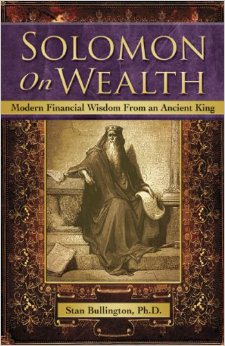
God has provided all things that pertain to life and godliness, 2 Peter 1:3. One of the fundamental needs for modern life (and godliness for that matter) is a proper attitude towards possessions and stewardship of our physical blessings. God’s word is not silent on this vital topic. Dr. Stan Bullington has provided a great resource, Solomon on Wealth for using the wisdom literature to provide a heavenly perspective on working and wealth. He writes about the blessings and dangers of wealth and using our financial situation to glorify God.

solomon-on-wealthI met Dr. Bullington a couple of years ago and heard him speak on this topic. Using both the wisdom of God, his personal experience, and the experiences of others he delivered a wonderfully scriptural perspective on financial stewardship. I have used this book for my own personal benefit and as a resource for teaching others. Using the study questions he wrote (available here), this resource can be used for teen, college age, and adult classes. It is perfect for a small group study or personal counseling with someone struggling financially.

Appendix 2 of the book is especially valuable as it contains a brief review of financial books written with a Biblical perspective (i.e., Dave Ramsey, Larry Burkett, and others). Most of his book is discusses the scriptures and principles with some guidelines on how to make practical application of the scriptures regarding our work, income, debt, investing, and proper perspective of material possessions.

From the cover: “Stan Bullington has taught economic analysis for engineers for more than twenty years, and has taught Bible classes for over thirty years.” The book is published by Bully Pulpit Press and is available from Truth Bookstore and Amazon (these are NOT affiliate links)

What Young People Want Their Parents to Know About Social Media

Loving GranddaugherOlder people have embraced social media to connect with family and friends and reconnect with old friends and acquaintances. Children and parents (and grandparents) are sharing this communications medium which creates potential areas of conflict and difficulties in the relationships.

I asked young people what guidelines they would like me to share with their parents and grandparents. Here were the replies: 

  • Don’t friend your child’s friends.  Most felt that it was acceptable if their friend initiated the request with the parent. Young people often feel awkward refusing an adult’s request.
  • Don’t complain about your child’s teacher or school officials online.  They have to live with the consequences of your rants, complaints, or “suggestions for improvement.”
  • Don’t complain about child discipline problems in public forums. Social media is not the place for “I’m so frustrated that my child just…” Do not reprimand them or correct them publicly. This also includes “How do you deal with a child who has …. problem?” posts.
  • Don’t brag too much about them—they feel embarrassed.
  • Don’t embarrass them.
  • Don’t post about potty training or the bowel movements of kids (just…don’t)
  • Don’t post embarrassing pictures or video (like kids on anesthesia) without asking permission. Even then, ask yourself what you hope to accomplish by posting a potentially humiliating picture or video of your child for all to see.
  • Don’t assume they can take a joke. Sensitivity changes quickly in young people.
  • Don’t comment on all of your child’s posts and pictures. Ask grandparents and excessively “interested” adults to refrain as well.
  • Don’t tag your child in EVERYTHING that you post.
  • Don’t get involved in your kids drama. They can handle it, we did. If they feel they need help they will talkwith you.
  • The really heavy stuff that makes you panic is probably a song lyric or movie quote.

Download this as a PDF Handout:

Parents Social Media Guide Pic

 Parents Social Media Guide

3 Life Lessons for Earthly and Spiritual Success

Graduating seniors and newlyweds receive well-meaning, often good, sometimes wrong life advice. Older people want to help others enjoy the blessings of life and avoid unnecessary difficulty. Even at Godly Youth I share guidance from the Bible, my life, and the lives of others to help others develop a closer relationship with God and live godly on this earth. There are many important principles to follow but I want to share three lessons that every person must learn.

Law of the Harvest

The first life principle we must recognize is what Steven Covey called the “Law of the Harvest.” The Law of the Harvest recognizes that actions have inescapable consequences. Much of life’s pleasure and pain is a direct result of our choices. God will judge us based on the things we have done, Romans 2:1-11. Consider Paul’s message to the Galatians:

Do not be deceived, God is not mocked; for whatever a man sows, that he will also reap. Galatians 6:7 (NKJV)

Organic Rice Field With Dew DropsPositive choices lead to positive consequences. Poor choices lead to negative consequences. You cannot kill someone as a drunk driver if you don’t get drunk. If your relationships are in turmoil and there is negative drama in your life consider your actions. Do you lose your temper? Do you gossip or lie? Are you doing immoral things with your friends? Are you enjoying good health and happiness because you have chosen to do things that do not harm your body or trouble your heart? Have you chosen friends who help you be more like Jesus or take you away from God?

We cannot control everything that affects the quality of our life but we can decide how we respond. Hardship can harden us or strengthen us; it’s our choice. We can dwell on the negative things cruel people say or focus on the positive things said by those who love us.

So the first life lesson is remember the Law of the Harvest and make good choices about who you are with, what you do, and how you react to the events of life. Make good choices at church, school, and work in order to grow and succeed spiritually, educationally, and professionally. Make good choices in dating relationships and marriage to strengthen your relationship. Always remember that some decisions seem small and insignificant but could have a profound change in the outcome of your life.

Mind Over Matter

The second principle is about self-control and self-direction. Some are slaves to their bodies and fleshly desires. They indulge their desires and rarely say “no” to the flesh. In order to succeed in life and grow spiritually we must control our desires.

In order to be physically fit and generate energy we must eat wisely and exercise frequently. I have to resist the urge to skip my workout in favor of sleep, an unhealthy meal, or any other activity. While exercising I often must ignore my physical desire to quit during a session and continue biking, running on the treadmill, or lifting weights while being aware of signals that I need to quit for my safety or to stay hydrated. At the restaurant, I need to order wisely and avoid junk food. The Law of the Harvest tells me that poor choices in the gym or at the restaurant will lead to poor results, Mind Over Matter reminds me that my spirit can control my flesh and my mind can overrule the body.

Dog With Leather LeashDogs are great animals but God did not give them higher reasoning. When you bring home a puppy, it is a bundle of uncontrolled desires: eat, drink, sleep, poop, and play. None of these desires are wrong but they are not always properly exercised. For example, it is good for the dog to eat and drink from his bowls but not from the garbage can and toilet bowl. After eating he will need to poop and we want him to do it outside, not on the carpet. We want the dog to sleep in a proper place and not to play by chewing our shoes. Since we cannot reason with the dog, what do we do? We train them.

By training the dog we teach it to overcome its desire to dig into the trash, drink from the toilet, soil the carpet, eat the shoes, and sleep on the pillow. We punish bad behavior by yelling “no” and making a loud noise or squirting it with water. We also reward good behavior with praise and treats. In fact, we can teach it to do tricks and perform acts, like playing fetch, through rewards.

In a similar way, we can bring our flesh under the control of the spirit. Romans 7:13-25 describes a war within our bodies between the spirit and the flesh. The flesh, like the dog, is incapable of following God. It is a collection of desires that are not wrong but can be used in a wrong way: hunger, thirst, sex, sleep, seek pleasure and avoid pain, and stay alive. Sex is not wrong in marriage but God condemns it outside of the marriage relationship. Thirst is not wrong but drunkenness is. Sleep is not wrong but laziness is sinful. It is not wrong to preserve our life but if we have to renounce Christ to save our life we will be lost eternally, Matthew 10:33. Christians must bring their body under the control of their mind, and the mind under the will of God.

Therefore do not let sin reign in your mortal body, that you should obey it in its lusts. And do not present your members as instruments of unrighteousness to sin, but present yourselves to God as being alive from the dead, and your members as instruments of righteousness to God. For sin shall not have dominion over you, for you are not under law but under grace.  Romans 6:12-14 (NKJV)

Finish Well

The final life lesson is that when we start worthy goals and efforts we must finish them. I am hesitant to say “finish what you started” because we sometimes start things that are a waste of time that could be put to a better use. There is no sense stubbornly finishing something just because you started it if there is a better way to use your time. Of course, this means we need to be wise about what we start so we can use our time effectively.

Man on top of mountain. Conceptual design.Assuming you have begun a worthy task, finish it. Ecclesiastes 5:3 says, “For a dream comes through much activity, and a fool’s voice is known by his many words.” Many people can talk a good game and babble about what they are going to do but the dream becomes reality through effort (activity). We can excited starting a new project or planning a new effort but when difficulties come we are challenged to stay focused and keep working until we reach the goal.

This principle will help us to be successful in life. Finishing school or work projects well require dedication and hard work. Success in sports requires us to work hard in practice when no one is cheering and finishing strong even if we are losing. I saw a tweet recently that said, “Commitment is staying loyal to what you said you were going to do long after the mood you said it in has left you.”  We can only enjoy the sense of accomplishment when we have crossed the finished line.

Spiritually, we need to finish well. 2 Peter 2:18-22 warns us not to be entangled in sin after leaving a life of sin lest we be disgusting in his sight. Hebrews 6:1-8 warns that we can leave God and develop a hard heart that will not want to return to God, crucifying Jesus again in our lives. Colossians 1:21-23 promises reconciliation is we remain steadfast and unmoved from our commitment to God and His will. We need to maintain our commitment to Christ until death even if we must do so in the face of persecution. We must not give up when we are tired but keep going knowing that our work is not a waste of time, Galatians 6:9; 1 Corinthians 15:58. Consider the warning and exhortation of the Hebrew writer:

Therefore do not cast away your confidence, which has great reward. For you have need of endurance, so that after you have done the will of God, you may receive the promise: “For yet a little while, And He who is coming will come and will not tarry. Now the  just shall live by faith; But if anyone draws back, my soul has no pleasure in him.” But we are not of those who draw back to perdition, but of those who believe to the saving of the soul. Hebrews 10:35-39

Final Thoughts

In order to have a successful and satisfying life on earth, usefulness in God’s kingdom, and an eternal home with God remember to make good choices for a good harvest, control your flesh with the spirit, and pursue good efforts and goals until they are completed.