
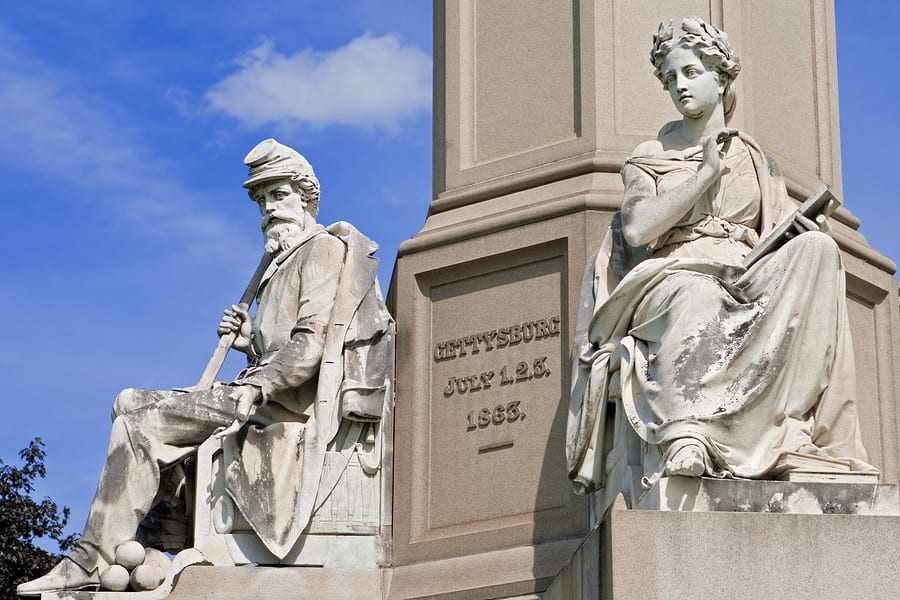
The final Monday of May is Memorial Day. For many, it is simply a day of recreation—the unofficial start of summer. It means a three-day weekend for trips to the beach, backyard barbecues, or an extra day off work.
However, the federal government originally created this holiday to remember soldiers who died in the Civil War. Today, we use this day to honor all American service members who died fighting for our country. When we think about their sacrifice, it is hard to fully grasp how much they gave and how much we received in return.
Sometimes, it is hard to connect with this holiday because the fallen feel so far removed from our daily lives. The Civil War took place so long ago that it feels like ancient history.
More recent conflicts—like the World Wars, the Korean and Vietnam wars, and the wars in the Middle East—were fought on foreign soil, far from our homes, and for people we did not know personally. Yet, we must never forget the heavy cost paid to protect our freedom.
Several years ago, a television special commemorated the anniversary of the D-Day invasion in Normandy. The most moving moment came at the end, when the camera panned back from a ridge where American soldiers had spent their first night on French soil.
That spot is now a cemetery holding over 4,000 soldiers who died taking Omaha Beach. Seeing the endless rows of white crosses is heartbreaking. Under each cross lies a young man who stepped off an American ship and directly into eternity.
Because of their sacrifice, we enjoy the freedoms we have today. Yet, many people only casually acknowledge this debt. These young men, cut down in the prime of youth, never got to marry, raise children, build careers, or grow old.
The documentary ended with these sobering words:
“These men gave their tomorrows for our todays.”
As citizens, we owe a deep debt to these fallen heroes. We have a responsibility to make our country the best it can be.
Too often, we divide ourselves over trivial arguments, take our nation’s wealth for granted, and make excuses for our failings. Instead, we should strive to live lives worthy of the freedom bought with their blood. We give their deaths meaning by living purposeful, honorable lives—a duty movingly illustrated at the end of the film Saving Private Ryan.
As we reflect on the sacrifice of our nation’s soldiers, represented by acres of white crosses, we should also remember the single cross that purchased our spiritual freedom.
A Spiritual Memorial Day
Adolf Hitler’s Nazi regime was a terrifying enemy. The storm troopers marching across Europe, the sudden blitzkrieg (lightning war) attacks, and the devastating bombings of England struck fear into the hearts of millions.
Yet, we face a far more dangerous spiritual enemy: the prince of darkness and his forces. Satan and his hosts have waged war against humanity for ages. We cannot resist this enemy on our own strength. Without help, humanity was trapped in the grip of sin and death, facing eternal separation from God.
In our darkest hour, Jesus entered our world. Empowered by the Holy Spirit, He took the battle directly to the devil.
During His ministry, demons cried out in fear and the devil retreated from every confrontation. Although Satan used wicked men to crucify the Savior, he could not win. Jesus rose from the dead, breaking the power of death and crushing Satan.
The apostles later sacrificed their lives to spread the gospel (good news) of the risen Savior. Even when rulers persecuted and killed early Christians, the message of salvation could not be stopped. As the apostle Paul wrote:
“O death, where is thy victory? O death, where is thy sting?”
Sometimes, we enjoy our spiritual freedom so much that we forget the immense price paid to secure it. Jesus left the glory of heaven and suffered a horrific death on the cross to purchase our salvation.
Before He died, He established a memorial: the Lord’s Supper. This communion service is a weekly reminder of His sacrifice. We must be careful never to let this special moment become a dry, meaningless ritual.
Let us never be casual about the cross. Instead, we should live every day remembering that He died to give us life, and that He wants to live His life through us.
Private Reflection Journal
What is one thing from this study that you can apply to your life today? Jot down your thoughts below.