
Several months ago, my dear niece Kaylin was feeling overwhelmed with school assignments, tests, essays, papers, and book reports. I sent her the following tips, which she said greatly helped her and the friends she shared them with. If schoolwork (or tasks at work) frustrate you, I hope these tips will help. These principles are useful at work, in managing a home, and even in Bible study.
(Hat tip to David Allen and his book Getting Things Done for teaching me many of these lessons.)
Getting Organized
Organize your commitments. Make a list of all your commitments—papers to write, test dates, and other assignments. Sort the list by due dates, placing the earliest deadlines at the top.
Define tasks for projects. For term papers or assignments that require multiple steps to complete, list the specific actions you need to take. Use the progression image below as a reminder:
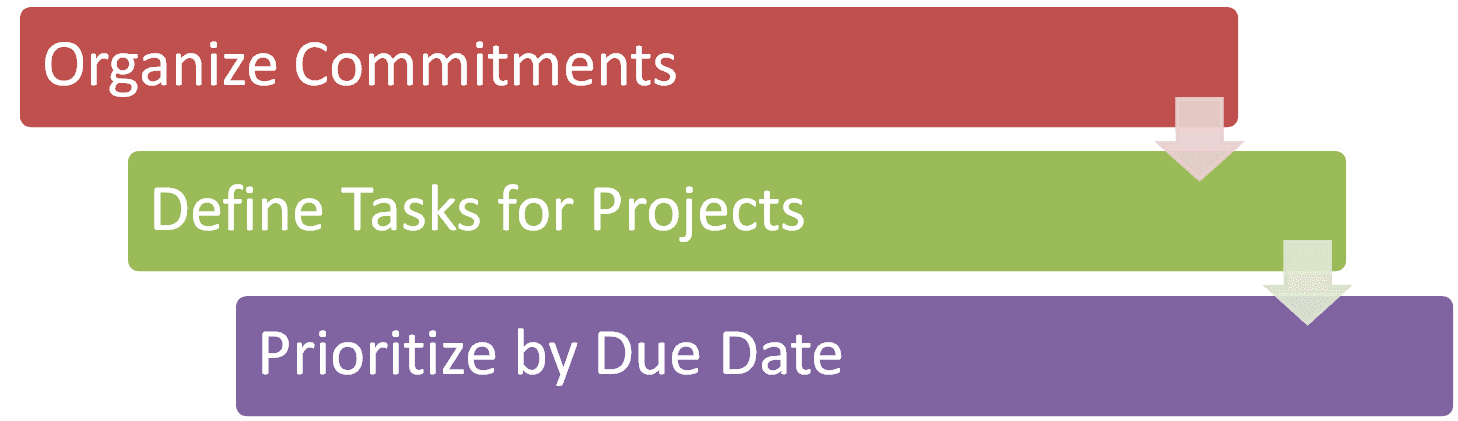
Break the project down into clear actions, such as:
- Get 3 library books on the History of Spain
- Read research materials
- Make reference cards
- Write the first draft
Assign due dates to each action. Allow plenty of time to finish each step before the final project is due.
Prioritize. Review your list of individual tasks and project steps, then sort them by due date. This will help you understand what you must finish first, second, and third. Knowing your plan will keep you from stressing about other assignments while you work.
Fighting Distractions
Background Noise. Turn on instrumental music (ambient, classical, or electronic) to listen to while you work. Music with lyrics is distracting because your mind tries to process words while thinking critically. Your brain does not have to interpret non-vocal music.
Vocal music is fine for crafts or building projects. However, listening to lyrics while reading a textbook or writing has a real cognitive cost (mental effort). You could also use a sound machine that generates peaceful sounds like ocean waves or rain.
Restrict Interruptions. This means no texting or phone calls. Put your phone on silent and place it in a drawer to remove temptation.
Unless you are doing online research, do not keep your browser open. If you must research, turn off social media and chat.
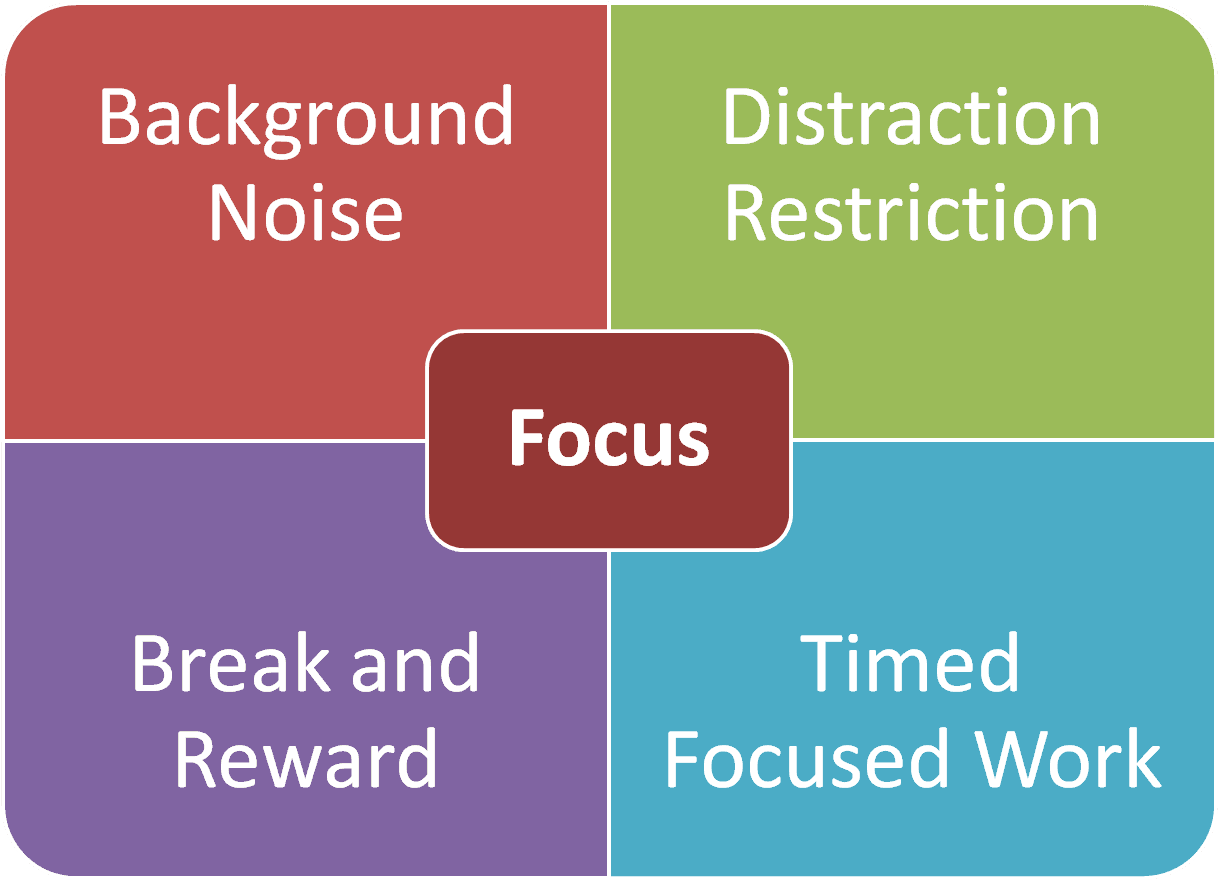
Removing interruptions will help you get into “the zone.” Constant interruptions break your flow, making work take much longer. Having social media open makes it too easy to drift away when tasks get tough. Put a “do not disturb” sign on your door.
Focused Work. Set a timer for 30 to 50 minutes and do nothing but your first task. Try to complete it before the timer goes off, but do not stress if you do not. Make it a game to see how much you can do. Do not stop working for anything—no checking messages, no cleaning—until the timer rings.
If your phone is your only timer, use a website like e.ggtimer.com so you do not have to look at your phone. A physical kitchen timer is even better because it keeps screens out of sight.
Break and Reward. When the timer goes off, set it again for 5 to 10 minutes. Use this brief break to stand up, stretch, check messages, or visit social media. As soon as the timer rings, shut off your devices and close social media immediately. Do not give in to the temptation to check “just one more thing.”
Resume. Reset the timer and either finish your current assignment or begin the next action on your list. Repeat this process until you finish today’s tasks.
Some tasks will have to wait until tomorrow. However, your priority list will give you confidence that you are on track. This brings peace, letting you enjoy your free time without worrying about unfinished work.
Other Tips and Observations
-
Don’t work for perfection, especially at first. When writing, just get your ideas down on paper. You can correct grammar and reword sentences later. This guarantees you have something to turn in if you run out of time, which greatly reduces stress.
-
Avoid letting the perfect become the enemy of the good.
Don’t let perfect be the enemy of good.
Do not spend so much time on formatting and appearance that you neglect other assignments. Do your best, and if you have extra time, you can go back and make it look nicer.
-
Be careful with sugary foods and energy drinks. They give a quick high, but you will feel more tired when you crash. Drink lots of water and snack on nuts or fruits for sustained energy.
-
Pray to God for strength. Thank Him for the opportunity to study. Ask for His help, and aim to use your education to His glory.
-
Learn to scan for long reading assignments.
Most books are filled with extra details surrounding a few key nuggets of information.
Use scanning techniques and speed reading methods to harvest the important points quickly.
-
Train your brain for test prep. Use mental images to associate terms and remember lists. The more unusual or outrageous the image, the easier it is to remember. You can also have a friend quiz you, and learn memory techniques to improve your recall.
Now available! You can download a PDF copy with these basic guidelines to post by your study area.
Download the study guide PDF here
Private Reflection Journal
What is one thing from this study that you can apply to your life today? Jot down your thoughts below.